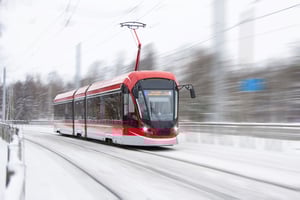
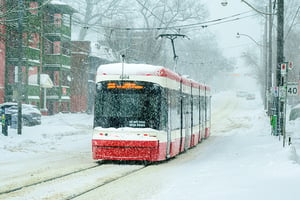
Why—and How—You Can Optimize Your Light Rail System Heating Infrastructure Last winter was rough on...
BLUE WIRE: Minimize Service Interruptions and Eliminate Costly Manual De-Icing with Lightweight, Cost-Effective Heating
Canadian winters surely can slow things down. And they test the limits of light rail systems every single day. Ice buildup on overhead catenary lines can interrupt power flow, damage infrastructure, and bring service to a halt when riders need reliable transportation the most.This past winter, light rail systems across Canada experienced heavy icing, as thick as two inches on some wires! For transit authorities, the challenge is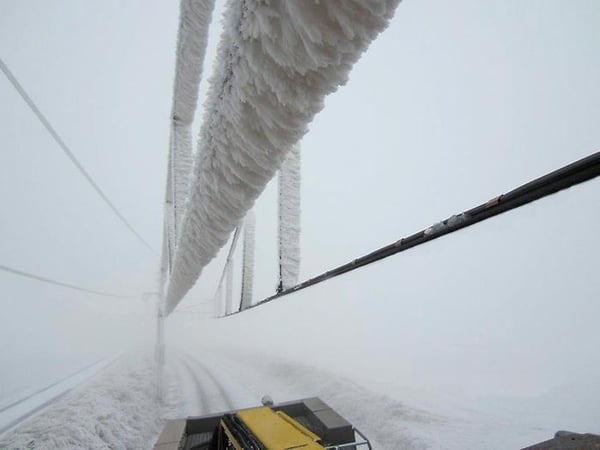 constant: how do you keep power flowing reliably when temperatures plunge and freezing precipitation hits without warning?
That is where BLUE WIRE, the only automated catenary wire heating system comes in.
The Hidden Risk: Ice on Catenary Systems
Unlike rail switches, catenary systems are exposed along miles of track—making them especially vulnerable to:
- Freezing rain and ice storms that coat contact wires
- Snow accumulation that melts and refreezes
- Temperature swings that create persistent icing conditions
Even a thin layer of ice can disrupt current collection, leading to:
- Power interruptions
- Service delays or shutdowns
- Increased wear on pantographs and wires
- Emergency maintenance interventions
Traditional approaches—such as manual de-icing or chemical maintenance—are hazardous and inefficient. They are also often performed too late, after ice has already formed on wires.
BLUE WIRE: A Smarter, More Cost-Effective Alternative to Manual Ice Removal
Traditional catenary ice management relies heavily on manual intervention—crews physically removing ice through scraping or applying de-icing chemicals like glycol. These methods are labor-intensive and costly, while also accelerating wear on catenary lines, which shortens asset life through repeated mechanical stress. Chemical treatments introduce additional concerns, including environmental hazards and ongoing material costs.
By reducing reliance on field crews and avoiding damaging removal techniques, BLUE WIRE lowers operating expenses, extends infrastructure lifespan, and provides a safer, more sustainable solution for maintaining optimal wire conditions throughout winter.
What Makes BLUE WIRE Overhead Wire Heating for Light Rail Different?
- Light-Weight Design
The catenary heating cable and 8 clips weigh just 95 g/m—3.35 ounces per meter or 1.04 ounces per foot.
- Even Heat Distribution Across the Wire
BLUE WIRE delivers consistent heating along the catenary, preventing cold spots where ice typically forms. - Designed for Continuous Exposure
Engineered to withstand harsh outdoor conditions, including extreme cold, moisture, and wind. - Integrated, Low-Profile Design
The system works seamlessly with existing catenary infrastructure without interfering with normal operations. - Reliable Performance in Extreme Conditions
Whether it’s steady snowfall or a sudden ice storm, BLUE WIRE maintains conductivity and system performance.
The catenary heating cable and 8 clips weigh just 95 g/m—3.35 ounces per meter or 1.04 ounces per foot.
Catenary Heating Built for Canadian Light Rail Systems
From Toronto to Calgary to Ottawa, Canadian light rail systems face a unique combination of challenges, including:
- Long-duration cold spells
- Frequent freeze-thaw cycles
- Heavy urban ridership demands
- Zero tolerance for extended downtime
BLUE WIRE is engineered with these realities in mind, helping Canadian transit systems maintain consistent power delivery even during the most severe winter events. BLUE WIRE helps eliminate disruptions by:
- Preventing ice buildup before it impacts performance
- Maintaining reliable contact between pantograph and wire
- Reducing unplanned outages and service interruptions
For transit authorities, that means improved on-time performance and an overall better rider experience.
Stop Chasing Ice: How BLUE WIRE Cuts Costs and Keeps Crews Safe
Manual de-icing—using expensive vehicles, maintenance crews, and harsh chemicals—is certainly disruptive. Beyond this, it’s expensive, inefficient, and poses potential a health and safety risks for workers. A BLUE WIRE system enables light rail operators to respond proactively, extend infrastructure life, and better manage operational, energy, and cost of ownership costs.
BLUE WIRE works equally well for problem areas—or across an entire light rail system in more extreme climates. The ability to heat overhead wires is especially helpful in areas prone to ice formation, such as:
- Yards
- Bridges
- Entrance/exit tunnels
- Tracks close to water
Winter maintenance often requires crews to work in challenging conditions—on elevated systems, in freezing temperatures, or during active weather events. Compared to traditional de-icing methods, BLUE WIRE requires fewer emergency interventions, reduces maintenance crews’ exposure to dangerous conditions, and enables safer, more reliable rail operations for workers and passengers.
Stronger, More Resilient Light Rail—Catenary Heating Engineered for Canadian Winters
As weather patterns become more unpredictable, light rail transit systems need infrastructure that can readily adapt to fast-changing conditions. The prospect of a severe winter no longer has to mean outages, service interruptions, or hazardous, labor-intensive manual deicing.
With BLUE WIRE, Canadian light rail systems can maintain continuous power, reduce operational risk, and deliver reliable service all winter long. NIBE is here to help you implement the best autonomous catenary heating solution to keep your wires free of ice and snow, workers safe, and operations running smoothly.
How can we help you with your next light rail heating project? Contact an engineer today to set up a consultation. We look forward to helping you soon.\