
A Game Changer for Keeping Tracks Free of Ice and Snow Winter weather poses a serious challenge for...
Autonomous, Predictive, Modulated Controls Keep Rail Switches Clear, Efficient, and Reliable in Extreme Winter Conditions
The winter of 2025-2026 was one for the record books—blizzards, freezing rain, and severe cold swept across the U.S. and Canada, leaving many rail networks scrambling to keep trains running. Switches—the critical track components that guide trains from one line to another—were especially vulnerable. When they froze or failed to move, delays piled up, passengers missed connections, and rail operators faced costly emergency callouts.
Fortunately, there are options to traditional rail heating systems, which often fail in extreme weather conditions. NIBE North America’s BLUE POINT Automated Rail Switch Heating Control System combines automation, sensors, and predictive weather monitoring to keep rail switches operational even under the harshest winter conditions.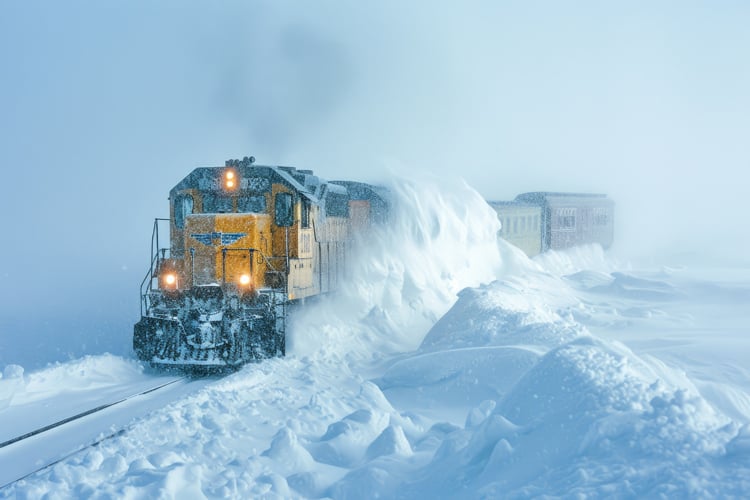
Why Switches Struggle in Extreme Winters
Rail switches are precision instruments, and winter weather can turn them into a liability. Ice, packed snow, and freezing rain can lock points in place, making it impossible for trains to safely change tracks. During the 2025-2026 winter storms, operators saw first-hand how quickly a single frozen switch could disrupt entire networks.
Typical culprits include:
- Ice between switch points and stock rails
- Snow packed down by passing trains
- Freezing rain creating a slick, immovable layer
- Rapid temperature swings that cause refreezing
When switches fail, the consequences are serious: delayed or canceled trains, frustrated passengers, emergency maintenance callouts, and even potential safety risks.
How Automated Switch Heating Systems Keep Switches Clear
Traditional switch heating often relies on dispatch control or manual operation. The problem? Heaters run whether or not heating is needed, wasting energy and sometimes failing to prevent ice buildup.
BLUE POINT was designed in response to the catastrophic blizzard that shutdown rail operations across much of the Northeast region of the U.S. in 2015. Noting the failure of traditional track switch heating systems, NIBE North America developed the first-ever dual-element modulated rail switch heating system.
Designed, automated, and built in the U.S., BLUE POINT uses patented pulse width modulation (PWM) to dial in the exact wattage needed—keeping tracks free of ice and snow, even in the most extreme conditions. The ability to modulate energy use has enabled train operators throughout North America to achieve energy savings of 90% and higher where BLUE POINT has been deployed.
Key features include:
- Weather and rail sensors: Detect when ice or snow is forming
- Predictive alerts: Activate heaters before conditions cause freezing
- Autonomous operation: No manual intervention required
- Energy-efficient heating: Only runs when needed, saving costs
During the extra harsh 2025-2026 winter, these automated “man-out-of-the-loop” systems proved their value across the U.S. and Canada. Switches stayed clear of ice and snow, and operators were able to focus on what they do best, keeping trains moving, rather than emergency response.
BLUE POINT: Smarter Switch Heating for Tough Winters
The BLUE POINT Switch Heating Control System isn’t just another heater—it’s a complete, intelligent switch heating solution. Unlike traditional systems, BLUE POINT adjusts in real-time to the environment.
Here’s what makes BLUE POINT stand out:
1. Autonomous Operation
BLUE POINT continuously monitors conditions and activates switch heating automatically, so operators don’t have to chase frozen switches during storms.
2. Predictive Winter Protection
By integrating weather forecasts and on-site sensors, BLUE POINT can heat switches before ice forms, keeping trains moving even during sudden snowstorms.
3. Energy Efficiency
No more heaters running constantly. BLUE POINT applies heat only when needed, saving up to 90%+ in energy costs, while keeping switches operational.
4. Reduced Emergency Maintenance
Because switches stay clear and operational, maintenance teams spend less time responding to failures and more time on planned tasks.
Benefits for Rail Operators and Passengers
When winter hits hard, like it did in 2025-2026, every minute counts. Automated switch heating delivers real-world benefits:
- Reliable service: Trains stay on schedule even during severe storms
- Fewer delays: Frozen switches are prevented before they become a problem
- Lower costs: Less wasted energy and fewer emergency callouts
- Improved passenger experience: Fewer disruptions mean happier commuters and travelers
Why More Rail Networks Are Choosing Automation
Extreme weather is becoming the new normal, and rail networks need solutions that go beyond reactive maintenance. Systems like BLUE POINT allow operators to stay ahead of winter storms, protect infrastructure, and keep trains moving reliably.
The harsh 2025-2026 winter was a clear reminder that automation, intelligence, and predictive control aren’t optional—they’re essential.
By installing a fully automated, electric switch point heating system with remote monitoring, railway operators can keep tracks free of ice and snow—even in the most extreme conditions—and achieve significant energy, labor, and operating cost savings.
NIBE is here to help you implement the best rail heating solution to keep your tracks free of ice and snow, make life simpler for operators, and enable tremendous energy savings.
How can we help you with your next rail switch heating project? Contact an engineer today to set up a consultation. We look forward to helping you soon.