Engineered for Urban Transit Systems to Withstand Harsh Winter Conditions When winter storms roll...
You Need a Heater Engineered to Operate in Standing Water While Resisting Salt, Corrosion, and Repeated Freeze/Thaw Cycles
For light rail, streetcar, and other urban transit systems with track embedded in shared roadways, standing water creates a very specific rail heating challenge. Water can collect below grade around the rail, bringing road salt and corrosive runoff with it. NIBE Element Railway Solutions North America (NIBE) developed the first-of-its-kind waterproof embedded rail heater specifically for these conditions. The completely sealed design is engineered to operate in standing water while resisting salt, corrosion, and repeated freeze/thaw cycles.
If you’re already seeing standing water around your switches, this is one winter reliability issue you have time to address before the cold set in this winter.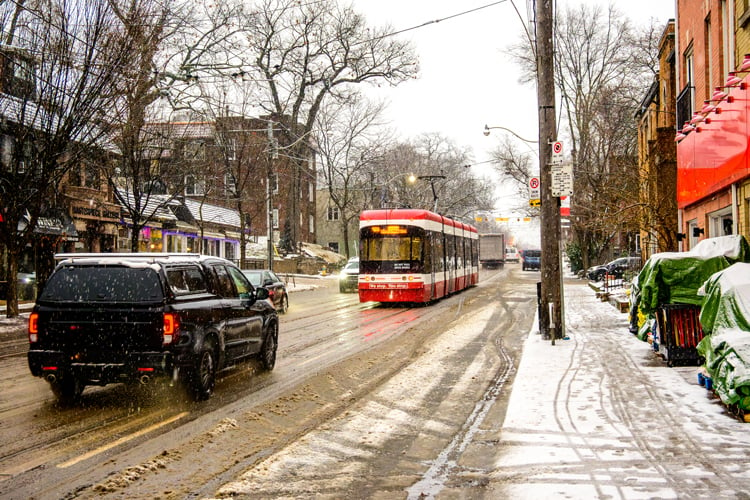
Why Standing Water Is So Hard on Embedded Rail Heaters
Embedded track creates challenges that aren’t as common in traditional ballasted rail. The heater can be surrounded by concrete or pavement, making access difficult. Standing water, road salt, and chemical runoff can collect around the rail and heater assembly.
Once moisture gets where it shouldn’t, corrosion and electrical failures can follow. Conventional stainless-steel rail heaters can be particularly vulnerable, resulting in:
- Water infiltration and electrical shorts
- Corrosion caused by road salt and de-icing chemicals
- Uneven heat transfer and cold spots
- Premature heater failure
- Difficult and expensive repairs in embedded track
- Heat loss that increases energy consumption
If an embedded heater within a shared roadway fails, accessing it means excavating the roadway—an expensive proposition. A heater with a longer service life means fewer disruptions, fewer replacements, and lower costs over time.
A Waterproof Embedded Rail Heater Engineered for Standing Water
NIBE developed its waterproof embedded rail heater specifically for the conditions found in shared-roadway transit applications. This isn’t a conventional rail heater made more weather resistant; it is a heater engineered to address the challenges of heating embedded track:
- Below-grade standing water and roadway flooding
- Corrosive salt runoff
- Freeze/thaw cycles
- Limited access
- The need to transfer heat efficiently to the rail
What Makes This Sealed Embedded Heater Work So Well
At the center of the system is a flat heating element designed to fit directly into the embedded rail channel. The heater is manufactured with Monel 400, a copper-nickel alloy highly resistant to saltwater and chemical corrosion. The heating element and integrated cable form a completely sealed assembly designed to prevent moisture intrusion.
The flat profile also provides excellent rail contact, improving thermal transfer where the heat is actually needed. For light rail and streetcar systems dealing with standing water, that means:
- Zero moisture risk with a completely sealed heater and integrated cable
- Purpose-built embedded design for shared-roadway rail applications
- Excellent corrosion resistance in salt- and chemical-heavy environments
- Nearly 2x the thermal conductivity of stainless steel
- More effective rail contact from the flat heater design
- Long service life backed by a 10-year warranty
- Straightforward installation using stainless-steel wave springs
NIBE’s embedded rail heaters are engineered specifically to address the challenges of water, salt, limited access, and rail geometry found in embedded shared-roadway track.
Extend Service Life and Reduce Embedded Track Costs
Reliability is important in any rail heating application. In embedded track, it’s even more vital because access itself can be time-consuming and expensive.
A failed heater along ballasted track may be fairly straightforward to reach. A failed heater beneath or alongside pavement can mean opening the roadway or disturbing surrounding infrastructure just to make the repair.
A heater that lasts longer, resists corrosion, and keeps moisture out can help reduce heater replacement costs, along with the labor, disruption, and infrastructure work associated with accessing it.
When evaluating embedded rail heating systems, heater life should be considered alongside the cost and difficulty of accessing that heater. NIBE’s embedded rail heaters are engineered for longer service life, helping to extend replacement cycles, reduce the need for roadway excavation, and lower costs over the life of the track.
Keep Water Out of Rail Heater Connections
A waterproof rail heater doesn’t help much if moisture can enter through the electrical connections.
NIBE’s hermetically sealed Gel Box, for below grade connectivity, is built to withstand extreme conditions. The power gel-filled cable joints provide additional protection against moisture intrusion at one of the most vulnerable points in the heating system. The sealed connections are designed for demanding outdoor rail environments and meet CENELEC EN 50393 requirements.
It’s another important consideration when you’re trying to keep an embedded rail heating system operating reliably through repeated exposure to water, salt, snow, and ice.
What If Your Track Isn’t Embedded?
NIBE’s expertise isn’t limited to embedded rail. For ballasted track applications, NIBE also offers rugged rail and switch heating solutions engineered for long life, efficient heat transfer, and demanding winter conditions.
The application may be different, but the engineering question is the same: Is the heater you’re using designed for the conditions it actually has to operate in?
Solve Today’s Problem. Plan for What’s Next.
Standing water may be the issue you’re dealing with today, but rail heating requirements rarely stand still. Over time, any number of things can change:
- Track is rehabilitated
- New lines and extensions are built
- Older heating equipment reaches the end of its service life
- Energy requirements evolve
An embedded heater replacement can also be considered within the larger rail heating system. Operations teams are always looking for ways to reduce manual intervention, improve reliability, and gain better visibility into what’s happening across the system.
NIBE can help you address problem locations now with waterproof rail heaters built for standing water, salt, and demanding shared-roadway conditions.
We can also help you evaluate how heating, controls, sensing, and automation—such as BLUE POINT, BLUE WIRE, and Intelligent Weather Station (IWS)—may fit into broader, long-term infrastructure improvements.
Seeing Standing Water? Now Is the Time to Take This Step.
If water is collecting around your switches now, don’t wait for the first hard freeze to find out how well your existing heaters can handle it. NIBE embedded rail heaters can be purchased for this winter, providing a practical solution for problem locations exposed to standing water, roadway runoff, salt, and corrosive conditions.
Seeing standing water around your switches? Talk with NIBE about solving the immediate problem—and how today’s heating decisions can support where your rail system is headed next.
NIBE Knows
Improve your winter readiness—prepare reliable embedded rail switches before the first winter storm ever arrives. Want to learn more about how we can help you optimize winter prep? Contact our engineering team today.
Frequently Asked Questions
Can rail switch heaters operate in standing water?
Yes, if they are designed for it. NIBE’s waterproof embedded rail heaters use a completely sealed heater and integrated cable designed for environments where standing water, roadway runoff, salt, and freeze/thaw cycles are common.
Why is Monel 400 used for embedded rail heaters?
Monel 400 is highly resistant to saltwater and chemical corrosion. It also offers excellent thermal conductivity, making it well suited for embedded rail applications exposed to water, road salt, and harsh winter conditions.
What is the difference between embedded and ballasted rail heating?
Embedded rail heating is designed for track installed within pavement or shared roadways, where standing water, salt runoff, and difficult access create unique challenges. Ballasted track has inherent drainage through the ballast. NIBE offers heating solutions for both applications.
Can NIBE embedded rail heaters still be purchased for this winter?
Yes. NIBE embedded rail heaters can still be purchased for this winter, providing an opportunity to address problem locations now while planning broader rail heating, controls, and automation improvements for 2027 and beyond.
Improve your winter readiness—prepare reliable embedded rail switches before the first winter storm ever arrives. Want to learn more about how we can help you optimize winter prep? Contact our engineering team today.